A practical guide for purchasing teams
The same shape can arrive with a very different specification.
Aluminium flat bar describes a rectangular product shape. Aluminium busbar describes a conductor used to carry and distribute electrical current. A suitable flat bar can therefore be a busbar, but matching width and thickness does not establish electrical suitability.
When comparing aluminium flat bar vs busbar quotations, check what each supplier has actually agreed to deliver: material, electrical properties, finished geometry and supporting records. The name on the quote cannot replace those details.
1. Are flat bar and busbar different products?
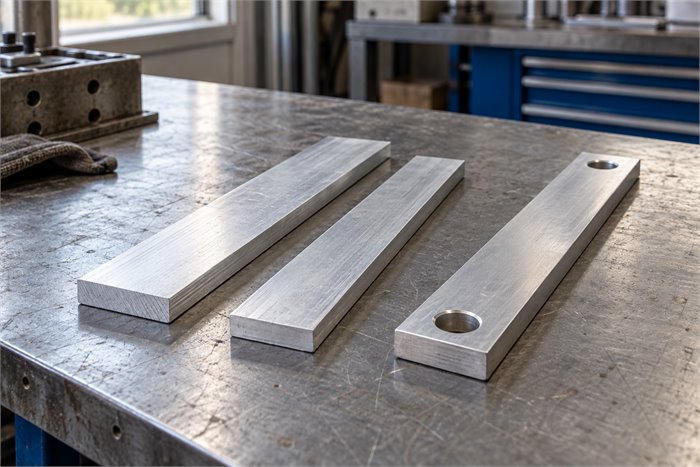
Sometimes, but the names overlap. “Flat bar” tells you the shape. “Busbar” tells you the intended electrical job. Neither term, on its own, tells you the complete alloy, temper, tolerance or inspection requirements.
Flat bar for general fabrication
For a bracket, spacer or machine component, the main checks may be strength, dimensions, machining and finish. Specify the actual mechanical duty; the word “aluminium” alone is still incomplete.
Flat bar for a current-carrying part
For a power connection or distribution bar, the material and finished part must also suit the electrical design. This adds checks for conductivity, heating, joints and installation conditions.
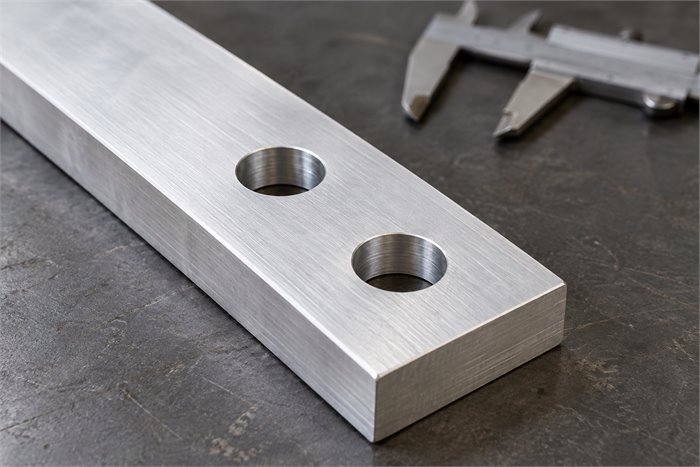
A busbar does not need holes, bends or plating to earn the name. It may be supplied as straight stock for later fabrication. Conversely, drilling holes in ordinary flat bar does not prove it is ready for electrical service.
The US spelling “aluminum” does not change this distinction. For dimensional terminology, see the flat bar sizes and specifications guide.
2. What extra requirements come with electrical use?
An electrical aluminium flat bar enquiry needs a defined material requirement and a clear installation context. Ask the design team for these inputs before comparing suppliers.
Specify the alloy and its temper
The alloy identifies the material composition. Temper describes its processing condition, which affects properties such as strength and formability. Even within 6101, different tempers provide different combinations of strength, forming behaviour and conductivity, as Hydro's 6101 guidance explains. “6101 aluminium” is therefore less precise than the full specified alloy and temper.
Ask what electrical property is being confirmed
Conductivity describes how readily the material carries electricity; resistivity describes how strongly it opposes it. Ask for the project's acceptance limit, test method and reference temperature, together with the agreed evidence. A general “electrical grade” description is not a substitute for a measurable requirement.
Standards are material-specific. The public scopes of ASTM B236/B236M-23 and ASTM B317/B317M-23 cover 1350 conductor bar and selected 6101 extruded conductor products respectively. They illustrate why the required standard must match the proposed material and product form; they are not interchangeable labels for every aluminium bar.
Define the connection and surface requirements
The contact area is part of the electrical connection, not just a cosmetic surface. State hole positions, contact faces and any specified treatment on the drawing. Hydro's busbar guidance highlights surface preparation, hardware and tightening requirements for aluminium joints. Agree the connection instructions for the actual design rather than copying a generic tightening value.
3. How can you tell whether two quotations are comparable?
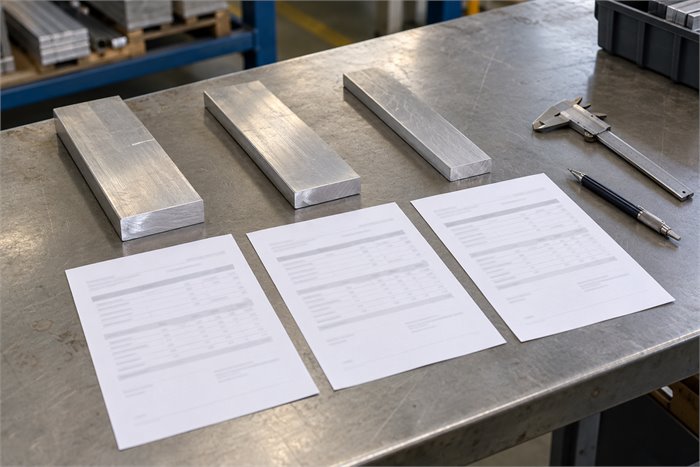
Compare each offer against the same written requirement, not against its product name. Mark missing details as “clarify”; treat a stated mismatch as a deviation requiring design review.
Fictional purchasing example: a drawing calls for 200 straight bars, each 50 × 6 × 1,000 mm (width × thickness × length), in 6101-T61. The drawing also defines finish and tolerances, and an accompanying specification sets the electrical acceptance requirement. This is a quote-review example, not a recommended busbar size or current rating.
On mobile, swipe the table sideways to read all columns.
| What the offer says | Buyer decision | What to do next |
|---|---|---|
| A: “Aluminium flat bar”, correct size, 6061-T6 | Material mismatch | Request the specified alloy and temper, or submit the alternative for design approval. Do not treat it as equivalent. |
| B: “Electrical aluminium busbar”, 6101, correct size | Clarification needed | Obtain the temper, electrical acceptance commitment, finish and inspection scope. The busbar label leaves these unanswered. |
| C: “Aluminium flat bar”, 6101-T61, matching drawing and electrical specification | Ready for detailed review | Confirm that the stated conformity and inspection records cover the supplied batch, then review commercial terms and remaining project requirements. |
Offer C is the most complete starting point despite being called “flat bar”. It still needs the normal approval process. Offer A is not necessarily poor material; it simply differs from this enquiry. Offer B may be suitable, but the description does not yet demonstrate that.
4. What should you put in the enquiry?
State the intended electrical use and separate material supply from finished-part or assembly responsibility. The supplier needs to know whether the order is for stock lengths, cut blanks or drilled and bent components.
Example wording for the fictional enquiry
Please quote 200 pieces of 6101-T61 aluminium flat bar for fabrication into electrical busbars, 50 × 6 × 1,000 mm, width × thickness × length.
Our drawing and electrical material specification will accompany the enquiry. Please confirm conformity to both, including dimensions, tolerances, finish and the required electrical property. Identify the inspection records supplied and how they relate to the delivered batch.
Please list any deviations separately and identify the operations included in your price. The bars are requested as straight blanks; subsequent fabrication and completed-equipment verification remain within our project scope.
Adapt the example to your approved requirements. If the design is still open, describe the intended use and ask for a preliminary material proposal; do not turn an unverified suggestion into the purchase specification.
Frequently asked questions
Does the word “busbar” guarantee a particular current capacity?
No. Ask what current claim applies to which material, geometry and installation conditions, and what supports it. A catalogue name or cross-sectional area alone cannot confirm the rating in your equipment.
Can I fabricate the busbar from purchased flat stock?
Yes, provided the stock and subsequent operations meet the approved design. Define who controls cutting, holes, bends, contact surfaces and final inspection. Material acceptance and finished-part acceptance are separate checks.
Why might a busbar quotation cost more than flat stock?
It may include fabrication, tighter agreed tolerances, surface treatment or additional inspection records. Ask for the supply scope to be itemised. A higher price does not itself prove better electrical performance.
Make your next quotation easier to compare
If 6101 is specified in your design, review the 6101 aluminium flat bar product page. Then send an enquiry with your application, drawing, alloy and temper, quantity and electrical requirements. Request a clear statement of the proposed supply scope and any deviations before placing the order.