To choose aluminium flat bar for an OEM project, start with what the finished part needs to do. Will it support a machine, fit between two parts or carry electricity? Then tell the supplier what size you need and whether the bar will be cut, drilled or bent. These details help narrow the material choice before you compare prices.
OEM means original equipment manufacturer—a business that makes equipment or products. If you buy parts for that business, you do not need to know every aluminium grade. You need a clear description of the job and a few useful questions.
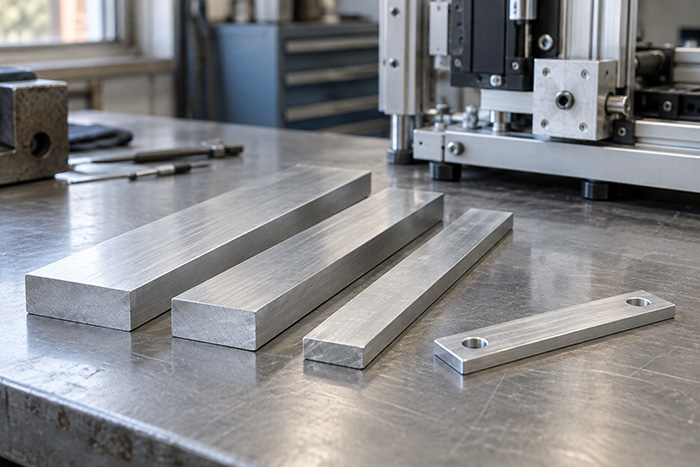
1. What will the bar do in your product?
Describe the use in everyday language first. “A mounting bar inside a machine” tells the supplier more than “good-quality aluminium.” Use the table below to start the conversation.
| Your application | What to tell the supplier |
|---|---|
| Supporting a part | What it supports, how it is fixed and whether it vibrates. |
| Fitting into an assembly | Where it fits and which sizes must match other parts. |
| Carrying electricity | The electrical use, available space and your engineer’s requirements. |
| Being bent into shape | The finished shape and who will do the bending. |
Also explain where the part will work. An indoor machine, an outdoor cabinet and equipment washed with chemicals have different needs. Mention heat, moisture and cleaning products early so the proposed material and finish can be checked for that setting.
2. Which material should you discuss?
Start with a short list based on the job. A grade is the type of aluminium, identified by a number such as 6061. The right choice also depends on how the part will be made and used.
For brackets, supports and machined parts
6061 is worth discussing when the bar will become a machine part. Hydro’s material guide describes its use in machinery and explains how it behaves during drilling and other machining. Check the proposed material against the load, shape and finished drawing. [1]
For parts that carry electricity
Ask about materials intended for electrical use. Hydro lists 6101A/B among its conductor options where both strength and electrical performance matter. Your engineer still needs to check the exact grade, connections and heat in the equipment. A bar’s size alone does not tell you how much current it can carry. [2]
You can start with the site’s 6061 flat bar page or 6101 flat bar page, then ask whether the proposed option suits your part.
One term worth knowing: temper
Temper describes the material’s condition after treatment. Letters and numbers such as T6 appear after the grade. They matter because treatment changes properties such as strength and ease of forming. Ask the supplier to state both the grade and temper, and explain why they suit your job. [1]
3. Are you buying a bar or a ready-to-fit part?
Decide how much work you want the supplier to complete. A cut piece and a finished part can have the same overall size but leave very different amounts of work at your workshop.
Example: 200 mounting bars for an indoor machine
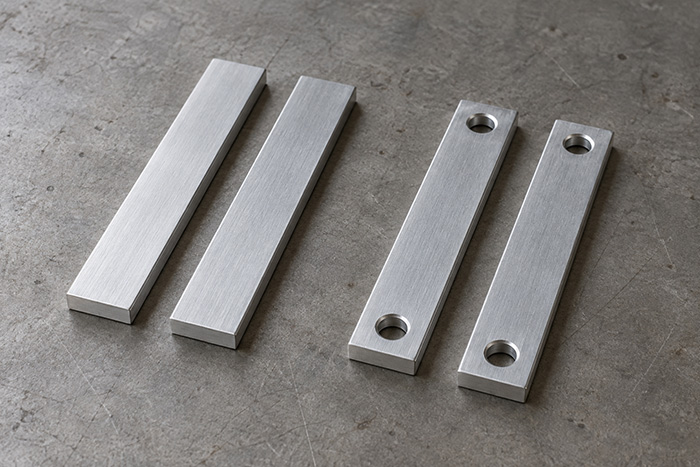
Imagine you need 200 bars, each 50 mm wide, 10 mm thick and 300 mm long, with two drilled holes. This is an illustrative buying example, not a customer order or a confirmed product offering.
Neither option is automatically cheaper. Compare the cost to get 200 usable parts, including work left to you, checks, packing and delivery. Ask each supplier to list what the price includes. Keep the material and finished drawing the same when comparing the two routes.
Make your enquiry easier to answer
Before sending, add the drawing version, hole sizes and positions, delivery destination and required date. Mark any dimension that controls fit. The useful result is two clearly defined offers, so you can decide whether to buy processing from the supplier or do it yourself.
Use the flat bar sizes guide if you need help writing width, thickness and length in the right order.
4. What should you check before the full order?
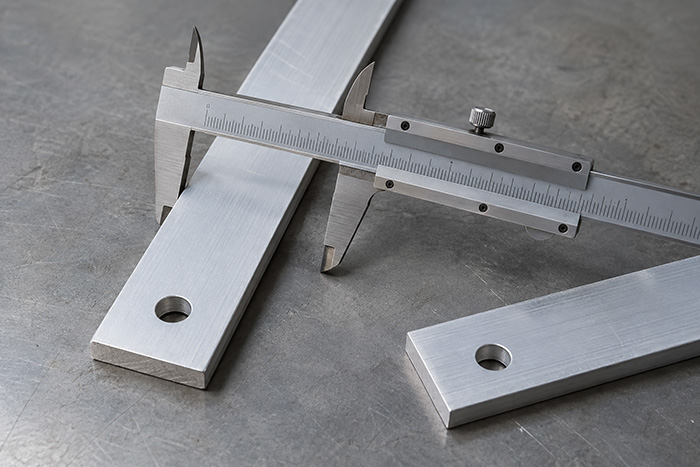
Check that the proposed material and sample match the job you described. A sample is most useful when you can try it in the assembly and compare it with the agreed drawing.
Does it fit? Check the sizes and hole positions that affect assembly.
Is the finish suitable? Look at edges, visible faces and any coating you requested.
Is the material identified? Match the grade and temper on the documents to the order.
Is the order clear? Confirm the drawing version, included work and how changes will be agreed.
Ask which product standard the bar will meet and which documents come with it. Standards cover particular types of material and product, so your technical colleague should confirm the right one. The paperwork should support your checks, not replace trying the part in its intended use. [3]
A few common buying questions
What if I do not know the grade?
Send the application, drawing and planned processing. Ask the supplier to explain a proposed grade and temper. Have the person responsible for the part’s design confirm the choice before ordering.
Do all sizes need very tight limits?
No. Focus on sizes that affect fit or operation. “Tolerance” means the allowed size variation. Ask your designer to set those limits where needed, rather than requesting the tightest possible control everywhere.
Can I reorder using only the previous sample?
Keep the approved drawing version and material details with the sample. Use them together for the next order, and ask the supplier to confirm any proposed change before making the parts.
Tell us what you are making
Planning an industrial aluminium flat bar order? Send your application, drawing and quantity through the enquiry page. Say which work you want completed before delivery. If the material is undecided, ask for a proposal with a clear explanation of the choice.
Sources
Sources checked on 13 September 2026. The buying example is illustrative, not a customer case.
[1] Hydro — Alloy 6061 (2019)
Material uses, machining, bending and treatment conditions.
[2] Hydro — Aluminium busbars and tubular conductors
Conductor options and factors affecting electrical selection.
[3] ASTM International — B221-21 public scope
Scope of the extruded aluminium product standard; public summary only.