How to Choose the Right Aluminium Flat Bar Supplier
The right supplier should understand your application, recommend a suitable alloy and temper, control dimensional accuracy, provide reliable inspection records and protect the material during international shipping.
For industrial buyers, supplier selection is essentially a process of reducing three risks:
· Specification risk: receiving the wrong alloy, temper or dimensions
· Quality risk: inconsistent surfaces, tolerances or mechanical properties
· Delivery risk: production delays, unsuitable packing or incomplete export documents
This guide explains the most important points to evaluate before placing an order.
Quick Answer
A reliable aluminium flat bar supplier should be able to:1. Recommend materials according to the application.
2. Confirm alloy, temper, size and tolerance before production.
3. Provide material and inspection documents when required.
4. Support custom dimensions and processing.
5. Use suitable export packing.
6. Give a clear quotation and realistic delivery schedule.
The lowest price is not always the lowest purchasing cost. Incorrect dimensions, unsuitable alloys and delivery problems can create much greater costs later.
1. Start with the Application
Before comparing suppliers, define how the aluminium flat bar will be used.The application determines the required conductivity, strength, corrosion resistance, machinability and bending performance. Different aluminium alloys can behave very differently because their properties are affected by alloying elements and heat treatment.
| Application | Important Requirements | Common Material Options |
| Electrical busbars | Conductivity, surface quality, dimensional stability | 1060, 1070, 1350, 6101 |
| Switchgear and power systems | Conductivity, strength and reliable connections | 6101, 1060, 1070 |
| Machinery components | Strength, machinability and weldability | 6061 |
| General fabrication | Formability and corrosion resistance | 1100, 5052 |
| High-strength parts | Mechanical strength and fatigue performance | 7075 |
The final alloy and temper should always be confirmed according to the actual engineering requirements.
A professional supplier will normally ask about your application before recommending a material. A quotation based only on width, thickness and length may overlook important technical requirements.

2. Check the Supplier’s Knowledge of Alloys and Tempers
An experienced aluminium flat bar supplier should explain why a particular grade is suitable rather than recommending the material that is easiest to sell.For example:
· 1060 and 1070 aluminium flat bars are commonly selected when high conductivity, corrosion resistance and formability are important.
· 6101 aluminium flat bar offers a practical balance between electrical conductivity and mechanical strength.
· 6061 aluminium flat bar is generally more suitable for machining, equipment parts and structural applications.
· 5052 and 5083 aluminium flat bars may be considered when corrosion resistance is a major requirement.
· 7075 aluminium flat bar is intended for applications requiring significantly higher strength.
Your website already provides aluminium flat bars in multiple grades for electrical, structural and industrial applications.
Temper is equally important. The same alloy can have different strength, hardness and bending behaviour in different tempers.
Ask the supplier to confirm:
· Alloy designation
· Temper
· Chemical composition
· Mechanical properties
· Electrical conductivity, when relevant
· Applicable production or testing standard
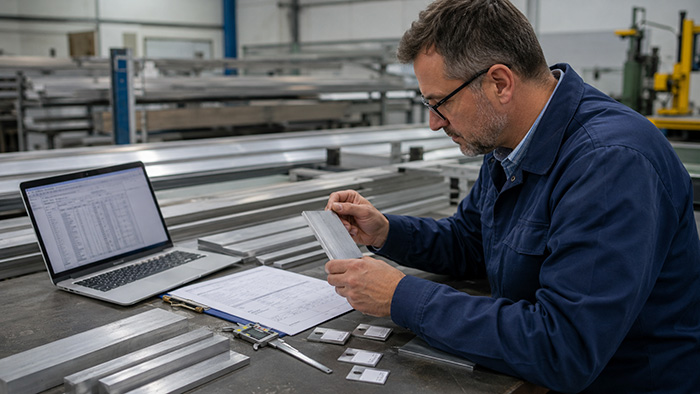
3. Confirm Dimensions and Tolerances Clearly
“100 × 10 mm aluminium flat bar” is not always a complete specification.A purchasing document should normally include:
· Width
· Thickness
· Length
· Width and thickness tolerance
· Straightness
· Flatness
· Corner or edge shape
· Surface condition
· Cut-length tolerance
· Quantity per size
For electrical busbars, dimensional consistency affects installation, current distribution and connection quality. For machined parts, excessive variation can increase processing time and scrap.
Square-edge and round-edge aluminium flat bars should also be distinguished. Round edges may improve handling and suit certain electrical applications, while square edges are often preferred for machining and general fabrication.
For special projects, send a technical drawing instead of relying only on written dimensions.
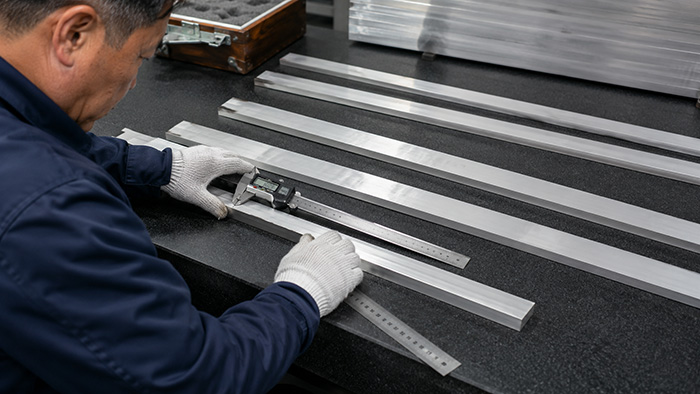
4. Evaluate the Quality-Control Process
A supplier should be able to describe how the product is inspected, not merely state that the quality is good.Important inspection items include:
| Inspection Item | What Should Be Checked |
| Material | Alloy, temper and chemical composition |
| Dimensions | Width, thickness, length and tolerance |
| Shape | Straightness, flatness and edge condition |
| Surface | Scratches, dents, oxidation and contamination |
| Performance | Mechanical properties or conductivity when required |
| Packing | Protection, bundle stability and shipping marks |
For critical orders, buyers may also request:
· Material certificates
· Inspection reports
· Conductivity test results
· Sample approval
· Pre-shipment photographs
· Third-party inspection
A sample can help confirm the material, surface and processing quality, but the supplier should also explain how consistency will be maintained during bulk production.
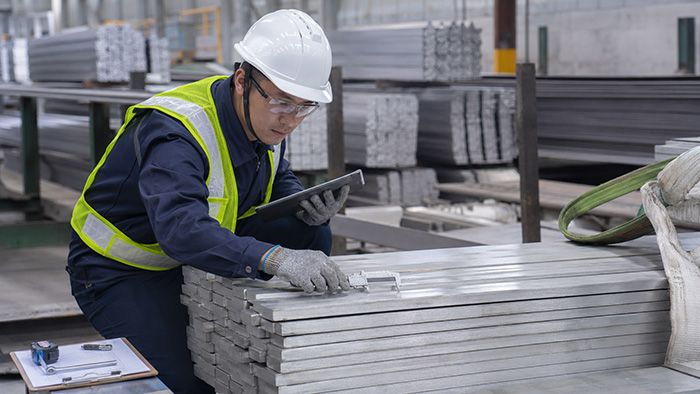
5. Compare Total Purchasing Cost, Not Only Unit Price
Price per kilogram is important, but it should not be the only comparison point.A lower quotation may exclude necessary items such as:
· Precision cutting
· Special tolerances
· Surface protection
· Export wooden packing
· Material testing
· Tooling or mold costs
· Documentation
· Inland transportation
The real purchasing cost also includes the consequences of incorrect material, rework, production delays and rejected goods.
When comparing quotations, confirm that each supplier is quoting the same:
· Alloy and temper
· Size and tolerance
· Quantity
· Processing requirements
· Packing method
· Trade term
· Delivery destination
· Payment terms
Without a common specification, two prices may not be directly comparable.
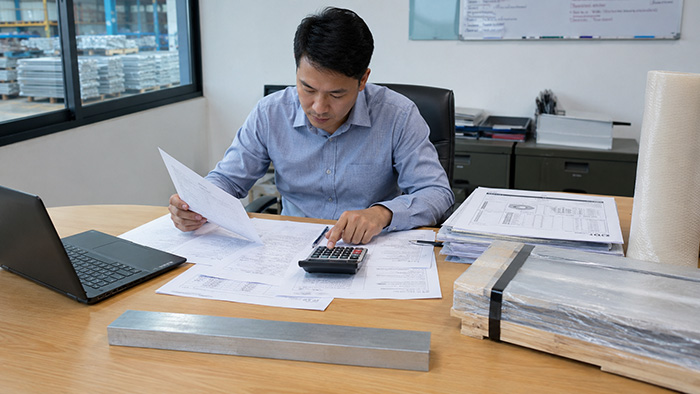
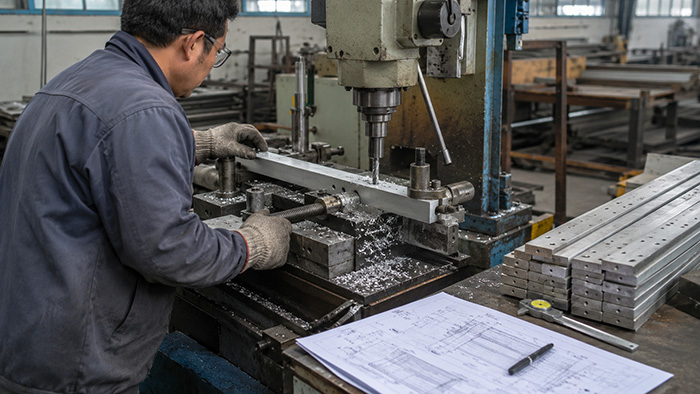
6. Check Customization and Processing Capability
Standard stock sizes may be suitable for simple projects, but many B2B orders require customized production.A capable supplier should explain whether it can provide:
· Custom width, thickness and length
· Round or square edges
· Precision cutting
· Drilling or punching
· Bending
· Surface treatment
· Special packing
· Production according to drawings
Henan Meisitu supplies aluminium flat bars in different grades, sizes and tempers, with customization based on customer drawings and project requirements.
For special dimensions, ask whether tooling is required and whether the tooling cost can be refunded or shared after the order reaches a certain quantity.
7. Review Export Packing and Delivery Experience
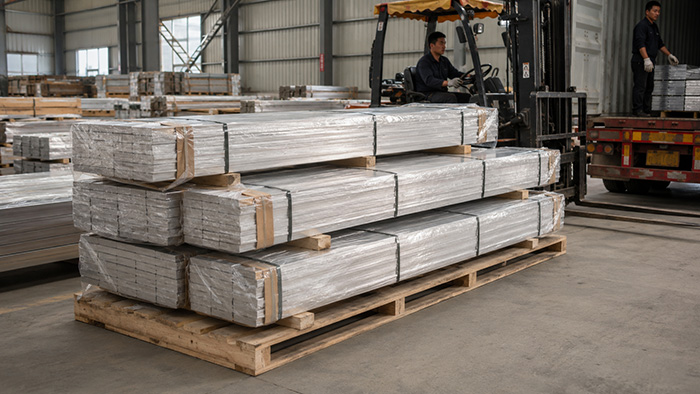
Aluminium flat bars can be scratched, bent or exposed to moisture during long-distance transportation.Suitable export packing may include:
· Protective film or paper between layers
· Strong bundles with suitable supports
· Moisture-resistant wrapping
· Wooden pallets or wooden cases
· Clear size and batch labels
· Reinforcement for container loading
The supplier should also be familiar with commercial invoices, packing lists, certificates of origin, bills of lading and other documents required by the destination market.
Good export packing is not only about appearance. It helps ensure that the material arrives ready for installation or further processing.
8. Use a Supplier Evaluation Scorecard
A simple scoring system makes supplier comparison more objective.| Evaluation Area | Suggested Weight |
| Technical understanding | 25% |
| Product quality and inspection | 20% |
| Dimensional and customization capability | 20% |
| Price transparency | 15% |
| Delivery and export experience | 10% |
| Communication and response quality | 10% |
A supplier offering the lowest price but weak technical support may create more risk than a supplier with a slightly higher but complete and transparent quotation.

Warning Signs to Watch For
Be cautious when a supplier:· Recommends an alloy without asking about the application.
· Avoids confirming the temper or tolerance.
· Cannot provide material documentation.
· Gives an unusually low price without explaining the specification.
· Uses vague descriptions such as “standard quality.”
· Cannot explain its inspection procedure.
· Changes the quotation frequently without a clear reason.
· Does not specify the packing method or delivery terms.
Clear technical communication before ordering usually reflects better production control after the order is placed.
Information to Send for an Accurate Quotation
To receive a useful quotation, provide the following information:1. Aluminium alloy and temper
2. Width × thickness × length
3. Quantity for each size
4. Product application
5. Required tolerance
6. Edge shape
7. Processing requirements
8. Surface requirements
9. Packing method
10. Delivery port or city
When the grade is uncertain, send the application, operating conditions and current material specification. A knowledgeable supplier can then recommend possible options for engineering evaluation.
Frequently Asked Questions
What makes a good aluminium flat bar supplier?
A good supplier combines material knowledge, dimensional control, quality inspection, customization capability, transparent pricing and reliable export delivery.Should I choose an aluminium flat bar supplier based on price?
Price should be considered together with alloy, temper, tolerances, testing, processing, packing and delivery terms. A low price based on an incomplete specification may increase the final purchasing cost.Which aluminium flat bar is suitable for electrical applications?
1060, 1070, 1350 and 6101 are commonly considered for electrical applications. The correct selection depends on conductivity, strength, bending, temperature rise and connection design.Can aluminium flat bar be customized?
Yes. Width, thickness, length, alloy, temper, edge shape, surface condition and processing can often be customized, subject to production method and minimum order quantity.What documents should I request from the supplier?
Depending on the project, buyers may request a material certificate, chemical composition report, mechanical-property report, dimensional inspection report or conductivity test report.Conclusion
The right aluminium flat bar supplier should do more than provide material at a competitive price.It should help you define the specification, select a suitable alloy, control production quality and manage export delivery. Evaluating these capabilities before placing an order can reduce purchasing risk and improve the consistency of your final product.
Henan Meisitu supplies aluminium flat bars for electrical and industrial applications in grades including 1060, 1070, 1100, 6061, 6101 and 7075. Custom sizes and export packing are available according to project requirements.
Send us your required alloy, temper, width, thickness, length, quantity and application. We will review the specification and provide a suitable quotation.